How to Write a Business Plan That Actually Works
By
Maia Craig
July 20, 2026
Latest
Many aspiring entrepreneurs assume a business plan needs to be a lengthy document filled with complicated financial projections, industry jargon, and dozens of pages that nobody will ever read.
In reality, the best business plans are not necessarily the longest or most detailed. They are the ones that provide clarity.
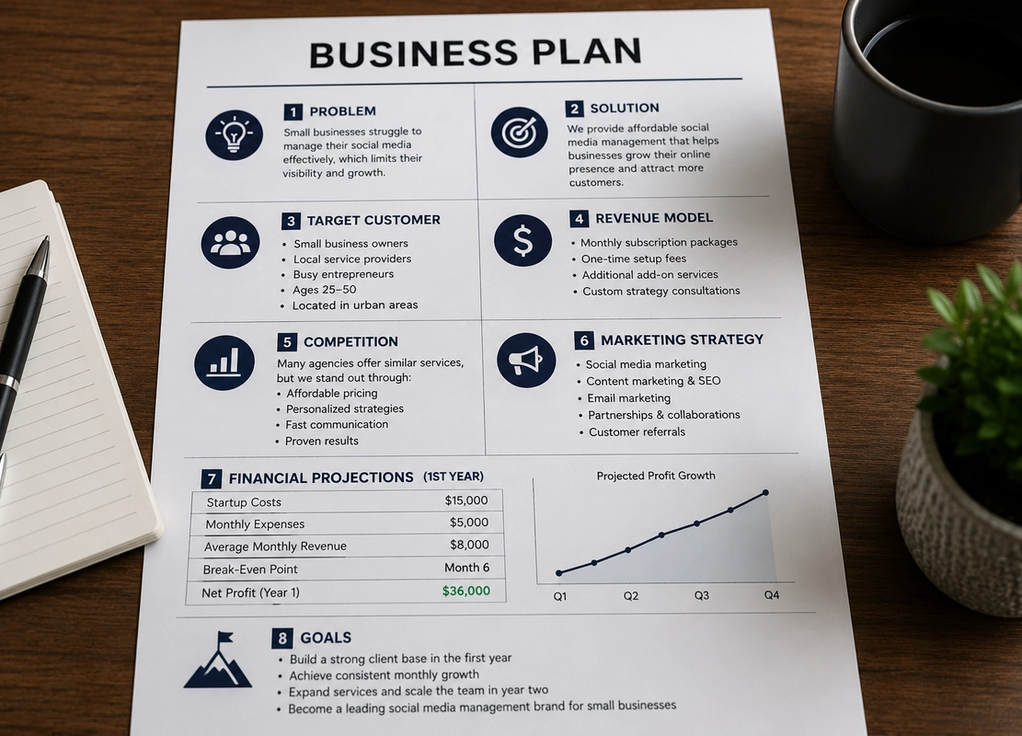
A good business plan helps you understand what you’re building, who you’re serving, how you’ll make money, and what steps you need to take to grow. Whether you’re launching a side hustle, opening a local business, or seeking investors, a practical business plan can serve as a valuable roadmap.
The goal isn’t to create a document that looks impressive. It’s to create one that helps you make better decisions.
Start with the problem you’re solving
Every successful business exists because it solves a problem.
Before thinking about logos, websites, or marketing strategies, clearly define what challenge your customers face and how your business helps address it. The more specific you can be, the stronger your plan will become.
For example, a business might help small companies manage social media, provide affordable tutoring services, deliver healthy meals to busy professionals, or simplify bookkeeping for freelancers.
Customers rarely buy products or services simply because they exist. They buy solutions.
A strong business plan begins with understanding exactly what problem you’re solving and why people will care.
Define your target customer
Many new businesses make the mistake of trying to appeal to everyone.
In reality, the more clearly you understand your ideal customer, the easier it becomes to market your business and develop products or services that meet their needs.
Think about questions such as:
- Who is most likely to buy from you?
- What challenges do they face?
- How old are they?
- Where do they live?
- How do they currently solve this problem?
The answers help create a clearer picture of your audience and make future business decisions much easier.
When you know who you’re serving, you’re more likely to create something they actually want.
Explain how your business makes money
A surprising number of business ideas fail because the revenue model is unclear.
Your business plan should clearly explain how money enters the business. Will customers pay a one-time fee? A monthly subscription? A consulting rate? A commission? Product sales?
This section doesn’t need to be complicated, but it should answer a simple question:
How does the business generate income?
Understanding your revenue model also helps determine pricing, marketing strategies, and growth opportunities.
A business can only survive if it has a sustainable way to make money.
Analyze the competition realistically
Some entrepreneurs claim they have no competitors. In most cases, that’s not true.
Even if no company offers exactly the same product or service, customers are already solving the problem somehow. Understanding those alternatives is important.
Research businesses that serve similar audiences or address similar needs. Look at what they do well and where opportunities exist for improvement.
The goal is not to copy competitors. It’s to identify how your business can differentiate itself.
Your advantage might be lower prices, better service, greater convenience, specialized expertise, or a unique customer experience.
Create a simple marketing strategy
Many business plans spend pages discussing products while dedicating only a few sentences to customer acquisition.
Yet even the best products won’t succeed if nobody knows they exist.
Your marketing section should explain how you’ll attract customers. Depending on the business, this may include:
- Social media marketing
- Content creation
- Email marketing
- Networking
- Referrals
- Paid advertising
- Partnerships
- Search engine optimization
You don’t need a complex strategy at the beginning. You simply need a realistic plan for reaching the people most likely to buy from you.
Growth begins with visibility.
Include realistic financial projections
Financial projections don’t need to be perfect, especially for new businesses.
What matters is demonstrating that you’ve thought through the numbers.
Estimate:
- Startup costs
- Monthly expenses
- Expected revenue
- Break-even point
- Profit goals
These figures will likely change over time, but creating projections forces you to think critically about the financial realities of the business.
Many entrepreneurs discover potential challenges during this exercise before they become expensive mistakes.
A business plan should help you identify risks as well as opportunities.
Keep it flexible
One of the biggest misconceptions about business plans is that they are permanent.
The reality is that businesses evolve. Markets change. Customers provide feedback. New opportunities emerge.
A business plan should be viewed as a living document rather than a fixed set of instructions.
Review it regularly. Update assumptions. Adjust strategies. Refine goals.
The purpose of the plan is not to predict the future perfectly. It’s to provide direction while remaining flexible enough to adapt when circumstances change.
Focus on clarity, not complexity
A business plan is only useful if it helps you make decisions.
Many entrepreneurs spend weeks creating elaborate documents filled with information they never use again. Meanwhile, some successful businesses operate with concise plans that clearly explain their goals, customers, finances, and growth strategies.
The best business plans answer a few essential questions:
What problem are we solving? Who are we helping? How will we make money? How will we reach customers? What are our goals?
If your plan can answer those questions clearly, you’re already ahead of many new businesses.
Because ultimately, a business plan doesn’t exist to impress people—it exists to help your business succeed.